
NEWS CENTER
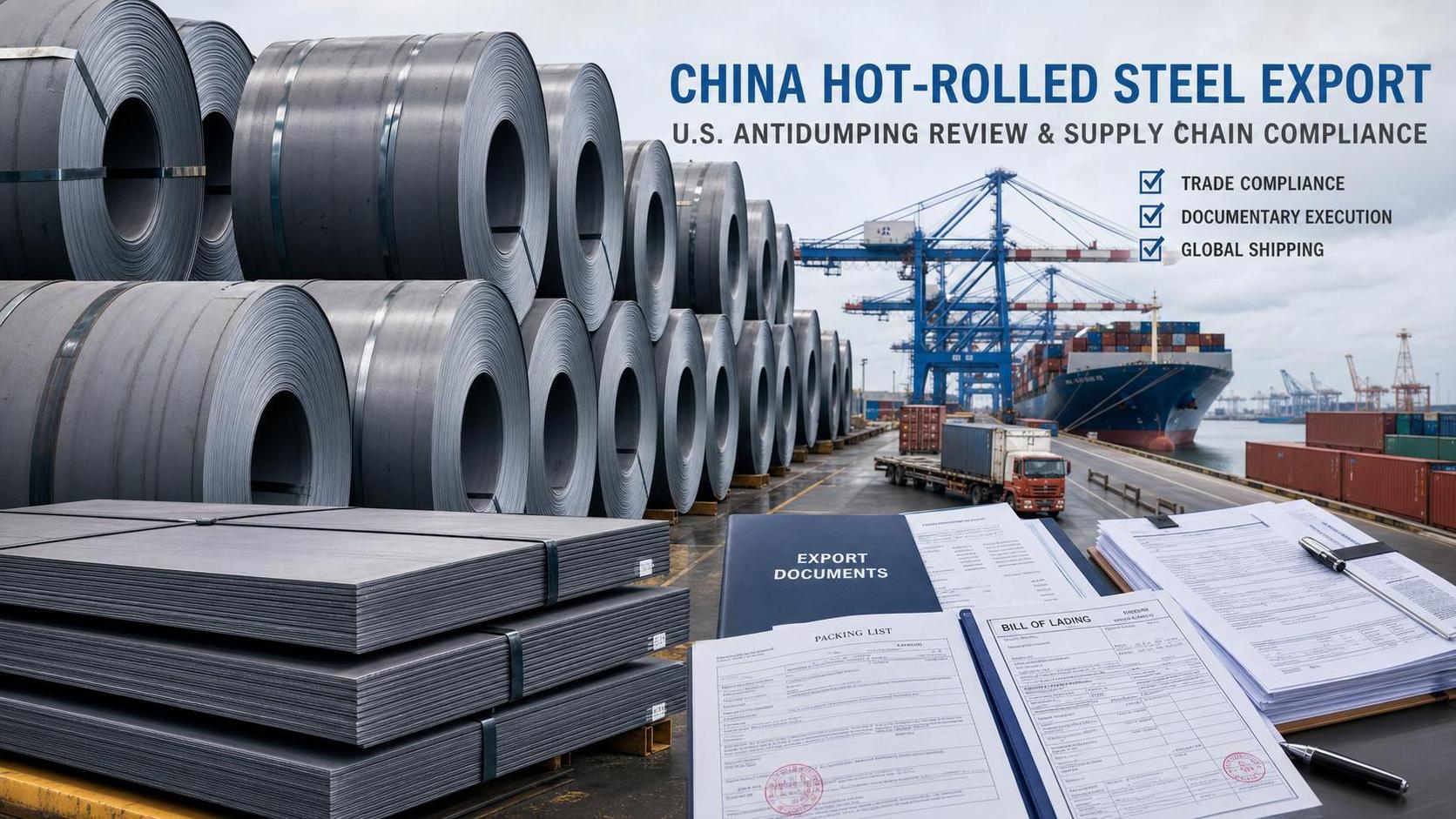
On July 16, 2026, the U.S. Department of Commerce announced an expedited sunset review of the anti-dumping duty order covering hot-rolled steel flat products from China. For the steel trade, this is not just a procedural update: it puts the current duty range of 12.5% to 248.9% back into focus and creates a near-term decision window for U.S. importers, customs-facing operators, and Chinese exporters that need to manage pricing, compliance, and shipment planning ahead of the expected result in December 2026.
What the Review Covers
The confirmed facts are limited but commercially significant. The review was formally initiated by the U.S. Department of Commerce on July 16, 2026, and it concerns the anti-dumping duty order on hot-rolled steel flat products originating in China. The proceeding is the first expedited sunset review of that order. Its purpose is to determine whether the existing anti-dumping duty rates, currently ranging from 12.5% to 248.9%, should remain in place. The result is expected in December 2026.
Where the Immediate Pressure May Appear
Import-side purchasing and landed-cost planning
From an industry perspective, U.S. importers are among the first groups likely to feel the impact because procurement decisions made in the coming months must account for possible continuity in duty exposure. The main pressure point is landed-cost calculation, especially where purchasing schedules, customs timing, and supplier commitments overlap with the review period. What deserves closer attention is whether buyers adjust order timing and quotation comparisons while the review remains unresolved.
Customs, clearance, and trade execution workflows
Supply chain service providers and customs-related operators may also face a more cautious operating environment. Analysis shows that when a review directly affects whether existing duty rates stay in force, the practical concern is less about headline interpretation and more about documentation discipline, declaration accuracy, and the treatment of product scope in routine trade execution. Businesses involved in clearance and trade handling will need to watch for any official wording that affects how transactions are assessed in practice.
Export quotations and compliance structure on the China side
For Chinese exporters, the issue is not only market access but also how to structure compliant quotations during a period of policy uncertainty. Observably, the review period can affect how exporters communicate prices, delivery assumptions, and duty-related responsibilities to overseas customers. The most sensitive business link is the connection between compliance positioning and commercial terms, particularly where buyers seek firmer cost visibility before December.
What Companies Should Track Now
Follow the official review timeline closely
Companies with exposure to this product flow should track subsequent official statements and timing signals tied to the review. The expected December 2026 result matters because purchasing and shipment decisions made in the preceding months may be assessed against a still-open policy outcome.
Separate confirmed rules from market interpretation
Analysis shows that one of the main risks in periods like this is treating market expectation as if it were a final regulatory outcome. Businesses should distinguish between what has been officially announced, namely the initiation of the expedited sunset review and the existing duty range under review, and what remains undecided until the result is published.
Recheck quotation logic, documents, and delivery assumptions
For exporters, importers, and intermediaries, the practical priority is to review whether current quotations, contract language, customs documents, and delivery schedules properly reflect the present duty context rather than an assumed future outcome. This is especially relevant where pricing validity periods extend into the second half of 2026.
Prepare customer communication and fallback scenarios
What deserves closer attention is the communication chain between sellers, buyers, and service partners. Firms may need clear internal and external explanations covering duty exposure, clearance cost assumptions, and shipment timing, so that any commercial adjustments over the next several months are handled consistently.
Why This Is More Signal Than Final Outcome
Observably, this development is better understood as an active policy signal rather than a concluded market result. The review has begun, but the decision on whether the current anti-dumping duty rates will continue has not yet been published. From an industry perspective, that means the event is important precisely because it affects decision-making before the formal outcome exists. It is more appropriate to understand this as a live development that requires continued monitoring, not as confirmation of a new trade condition.
How the Market May Read It for Now
At this stage, the industry significance lies in timing and exposure rather than certainty. The review places U.S.-China hot-rolled steel trade under renewed scrutiny for the months leading up to December 2026, and that alone can influence procurement rhythm, customs cost planning, and exporter pricing discipline. A neutral reading is that the announcement should be treated as a near-term operating factor and a longer-term policy signal, while final commercial conclusions should wait for the official result.
Basis of This Article and Ongoing Verification
This article is based on the user-provided news title, event date, and event summary concerning the U.S. Department of Commerce's July 16, 2026 initiation of an expedited sunset review on the anti-dumping duty order for hot-rolled steel flat products from China. For developments of this kind, relevant source categories typically include official government notices, company disclosures, industry association updates, authoritative media coverage, and trade-related regulatory documents. A specific official source link was not provided in the input, so the exact notice and any subsequent procedural updates still require ongoing verification. The next key point to monitor is the expected December 2026 review result and any official wording that affects procurement, customs cost treatment, and export compliance practice.

Fill in the information
NOW.
Our staff will contact you as soon as possible