
NEWS CENTER
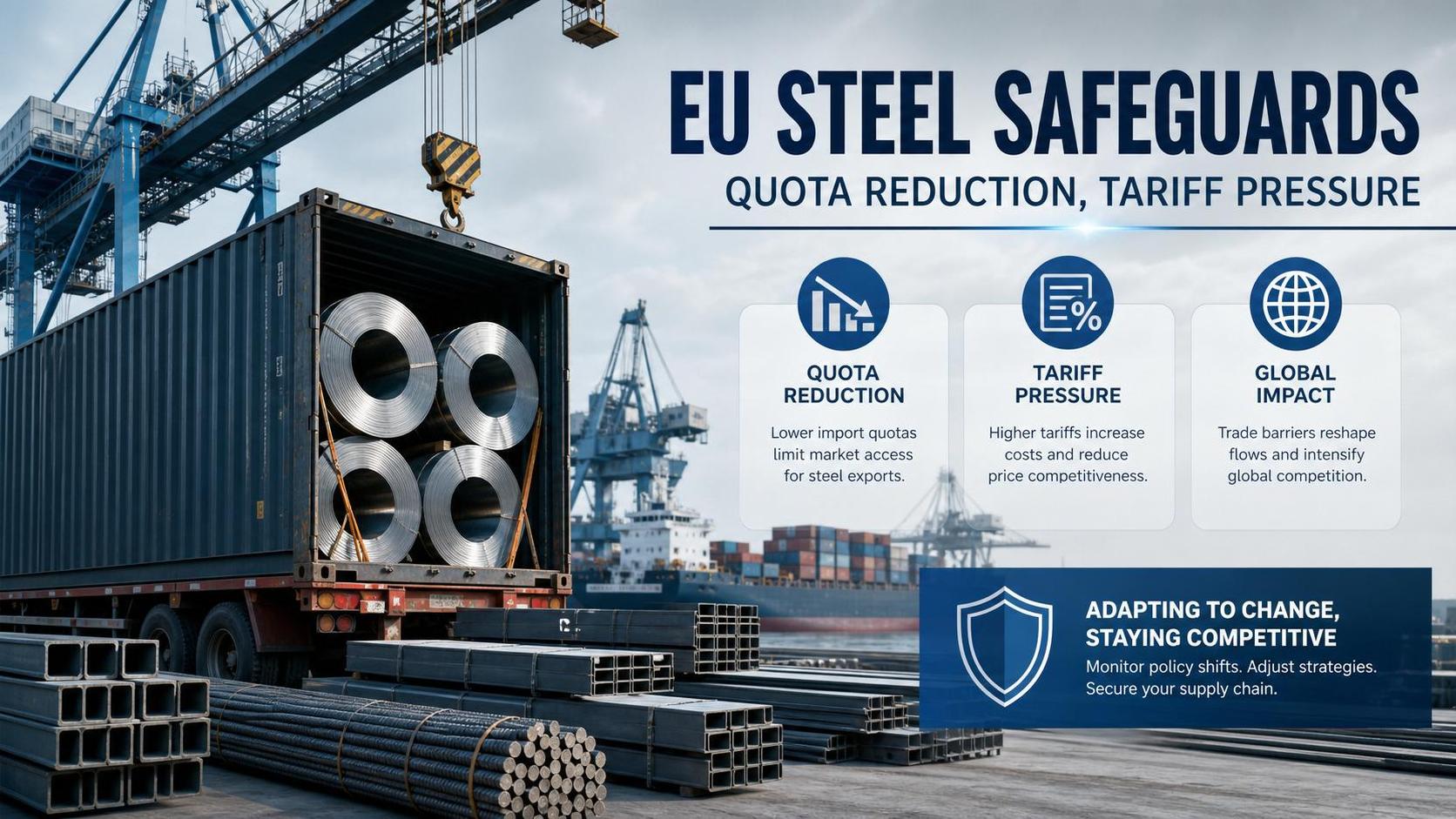
On July 1, 2026, the European Union is set to implement a revised steel safeguard regime after an agreement was reached on April 13, 2026 by the European Commission, the European Parliament, and the Council of the European Union. For steel exporters selling into Europe, as well as traders, procurement teams, manufacturers, and supply chain operators linked to EU-bound orders, this update deserves close attention because it changes both market access conditions and the cost logic behind shipment planning.
What the new measure changes
According to the provided information, the new safeguard arrangement will take effect on July 1, 2026 and replace the previous mechanism that had operated for eight years under the WTO framework. Under the revised rules, the duty-free import quota for steel will be reduced from 34.5 million tonnes to 18.3 million tonnes, a cut of 47%.
The same information states that steel imports exceeding the quota will face a 50% tariff, compared with the current 25%. The policy directly affects the market access eligibility, cost structure, and order planning of Chinese and other global steel exporters shipping to the EU.
Where the pressure is likely to appear first
Export-facing trade flows become harder to schedule
From an industry perspective, direct trading companies and exporters are likely to feel the impact first because quota availability and out-of-quota tariff exposure are closely tied to shipment timing and contract execution. What deserves closer attention is how quickly reduced quota space may affect decisions on when to book cargo, how to structure delivery windows, and whether existing order assumptions still hold.
Procurement and manufacturing teams face cost pass-through questions
Analysis shows that companies involved in procurement and downstream manufacturing may need to reassess landed-cost calculations for EU-related steel business. The key issue is not only whether material can enter within quota, but also whether a 50% tariff above quota changes pricing, sourcing feasibility, or margin expectations for orders connected to the European market.
Logistics and supply chain service providers may see planning risk rise
Observably, supply chain service providers, including teams managing documentation, shipping coordination, and delivery scheduling, may face greater execution risk when quota constraints tighten. The business impact is likely to appear in booking rhythm, document readiness, delivery commitments, and communication around whether cargo can still move under commercially acceptable terms.
What companies should watch now
Follow any further official wording closely
Analysis shows that the headline change is already clear, but businesses still need to watch for how the revised safeguard rules are expressed in official implementation language. For operational teams, the practical meaning of eligibility, timing, and application can matter as much as the headline tariff and quota figures.
Review product and order exposure to the EU market
Companies with EU-bound steel business should focus on which product lines, customers, and order cycles are most exposed to tighter quota conditions and higher out-of-quota duties. What deserves closer attention is not a general market reaction, but which active or upcoming transactions could face changes in access conditions or cost assumptions.
Separate policy signal from business execution
From an industry perspective, there is an important difference between the policy announcement and its day-to-day business effect. Firms should examine how the new safeguard framework may influence quotations, contract terms, shipment sequencing, and customer communication rather than assuming every order will be affected in the same way.
Prepare documentation and communication in advance
Observably, exporters, traders, and service teams should pay attention to supplier qualification, document completeness, fulfillment timing, and customer coordination. Where orders are sensitive to timing or price changes, early communication may be necessary to reduce execution disputes once the new regime takes effect.
How this news is best understood at this stage
Analysis shows that this development should not be read as a routine procedural adjustment. The scale of the quota reduction and the doubling of the out-of-quota tariff indicate a clear tightening of entry conditions for imported steel into the EU market. At the same time, it is more appropriate to understand this as both an immediate operational change and a policy signal that still requires continued observation in practical application.
Observably, the most relevant question for the industry is not only whether the measure is stricter, but how that stricter framework will translate into actual order allocation, delivery timing, and commercial decision-making across different business roles.
Why the July 1 start date matters
For the steel trade and related supply chain functions, this update matters because it changes the commercial boundary between quota access and tariff exposure from a known framework to a tighter one. A neutral reading is that the measure already creates a clearer cost and access constraint for EU-bound steel business, while the full operational effect still depends on how companies adjust order planning, sourcing, and delivery arrangements after July 1, 2026.
Basis of this article and follow-up verification
This article is based on the user-provided news title, event date, and event summary. For this type of development, relevant source categories typically include official announcements, company statements, industry association releases, authoritative media reporting, and related regulatory documents. No specific official source link was provided in the input, so further verification remains necessary. What deserves continued attention is any later official clarification and any rule-level detail that affects implementation, eligibility, and business execution.

Fill in the information
NOW.
Our staff will contact you as soon as possible