

On May 4, 2026, Australia put final anti-dumping duties into effect on hot-rolled coil originating in China, turning a trade remedy decision into an immediate operational issue for exporters, importers, buyers, and customs-facing supply chain teams. What makes this development worth close attention is not only the duty level itself, but the fact that the measure applies from the date of announcement, directly affecting landed cost calculations, customs declarations, and document checks for goods already in transit as well as newly signed orders.
The change now in force
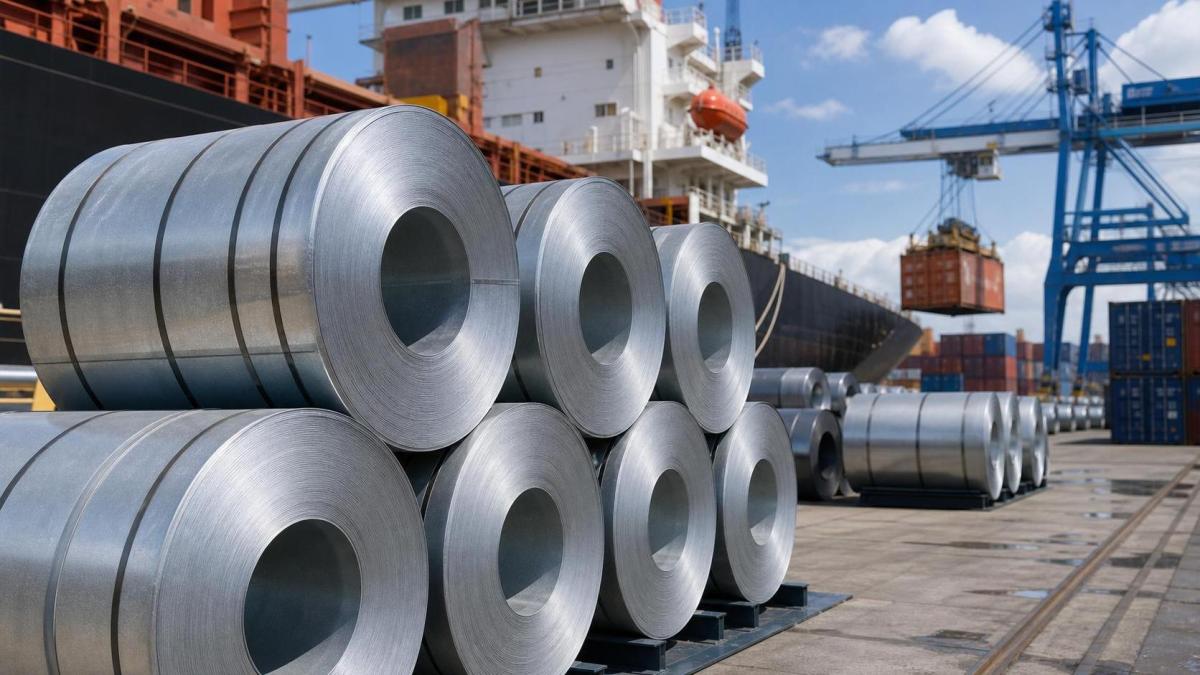
According to the provided event summary, Australia formally imposed final anti-dumping duties on Chinese-origin hot-rolled coil on May 4, 2026. Major exporters including Baoshan Iron & Steel and Meishan Iron & Steel are subject to duty rates ranging from 38.1% to 59.1%, while other non-cooperating exporters are subject to a uniform 79.0% rate.
The measure has taken effect from the date of the announcement. The summary further states that the change directly affects customs clearance costs and compliance declaration requirements for both in-transit cargo and new contracts. Importers are required to verify supplier qualification, certificates of origin, and the consistency of customs tariff classification, with the scope covering 17 HS codes, in order to reduce the risk of port delays or return of goods.
Where the operational pressure is likely to appear first
Immediate pressure on import purchasing decisions
From an industry perspective, importers and direct purchasing teams are likely to face the most immediate impact because the duty becomes part of the landed cost as soon as the measure takes effect. The pressure point is not limited to price negotiation; it also extends to whether existing supplier arrangements, shipment timing, and order terms still remain workable under the new duty burden.
What deserves closer attention is the need to match supplier identity, origin documentation, and product classification with the declared transaction. Where procurement has been arranged on a spot basis or under short lead times, the risk of mismatch between commercial documents and customs filing becomes more visible.
Export-side exposure for Chinese suppliers
Chinese exporters shipping hot-rolled coil to Australia may be affected differently depending on the applicable duty rate. Analysis shows that the distinction between named major exporters and non-cooperating exporters matters not only for pricing, but also for how counterparties assess sourcing reliability and customs risk at the time of order placement and clearance preparation.
For export-facing businesses, the key business links likely to be affected include quotation validity, contract negotiation, shipment planning, and supporting trade documentation. Buyers may also place greater weight on whether a supplier’s status and documentation can withstand customs scrutiny under the new measure.
Customs, logistics, and trade service providers face a tighter review cycle
Supply chain service providers involved in customs declaration, freight coordination, and document handling may see tighter execution requirements because the measure is already effective and covers 17 HS codes. Observably, this raises the importance of classification review, document consistency checks, and communication between cargo owners, brokers, and logistics teams before goods arrive or are declared.
In practical terms, the most sensitive steps are likely to be pre-clearance document review and the reconciliation of origin, supplier details, and HS code usage. Where these elements do not align, the risk described in the summary—port detention or return shipment—becomes a concrete compliance concern rather than a theoretical one.
What companies should check right now
Reconfirm supplier status before customs filing
Analysis shows that companies should first determine whether their supplier falls within the identified exporter group subject to rates between 38.1% and 59.1%, or whether the transaction could be treated under the 79.0% rate applicable to other non-cooperating exporters. This is a practical compliance checkpoint because supplier identity now has direct cost and clearance implications.
Review origin evidence and HS code alignment
The provided summary explicitly highlights certificates of origin and customs code matching. It is therefore more appropriate to understand document review as an immediate action item rather than a routine back-office task. Businesses handling affected products should pay close attention to whether product descriptions, origin evidence, and the relevant HS coding remain internally consistent across contract, invoice, shipping, and customs declaration records.
Reassess in-transit and newly signed orders separately
Because the measure applies from the announcement date and directly affects both in-transit cargo and new orders, companies may need to review these two order groups separately. Observably, the commercial and compliance risks are not identical: one concerns goods already moving toward clearance, while the other concerns whether new purchasing decisions still make sense under revised duty exposure and documentation requirements.
Watch for execution language in downstream trade documents
What deserves closer attention is how this rule change may be reflected in practical trade execution, including customs submission materials, procurement documentation, and contract wording used in ongoing transactions. The provided information does not set out detailed enforcement wording beyond the effective measure itself, so companies should treat this as an area for continued verification rather than assume a settled practice.
Why this reads as an execution signal, not just a headline
Analysis shows that this development is better understood as a rule already entering execution rather than a distant policy discussion. The key signal is that the measure is in force from the date of announcement and is linked directly to customs cost, declaration requirements, and shipment handling risk. That shifts the issue from market commentary to operational readiness.
At the same time, it is also reasonable to view this as a development that still requires close observation in practice. The supplied information confirms the duty rates, product scope reference, and immediate compliance focus, but it does not provide further detail on how all market participants will interpret and implement documentation checks in real transactions. For that reason, ongoing market and execution feedback still matters.
How the market may need to frame this change
From an industry perspective, the main significance of this event is that a trade remedy measure has become an active checkpoint for pricing, customs compliance, and shipment execution in the Australian market for affected hot-rolled coil imports from China. The most rational reading at this stage is not that all consequences are fully known, but that the compliance threshold for current transactions has clearly tightened.
It is more appropriate to understand this update as a landed rule change with immediate implications for spot procurement and customs-facing operations, while leaving room for continued observation of implementation language, transaction practice, and market response.
Basis of this article
This article is generated from the user-provided news title, event date, and event summary. For developments of this type, commonly relevant source categories may include official announcements, regulator publications, customs or trade authority information, industry association releases, standards-related documents, and reporting by authoritative business media.
No specific official source link was provided in the input, so the exact official publication path still requires ongoing verification. Further observation is also needed on any later execution detail, compliance interpretation, procurement document changes, tender wording, industry feedback, and how affected companies handle implementation in practice.

Fill in the information
NOW.
Our staff will contact you as soon as possible