
NEWS CENTER

From August 1, 2026, the EU’s Carbon Border Adjustment Mechanism (CBAM) enters its third phase for steel product imports, bringing hot-rolled, cold-formed, and structural steel sections into the reporting scope. For exporters, importers, distributors, and customs-facing supply chain participants, the immediate issue is no longer general policy direction but a concrete entry requirement: certified embedded carbon emissions data must be submitted through the EU CBAM portal before the goods can clear. That makes this development relevant not only for compliance teams, but also for delivery scheduling, documentation control, and trade execution across the steel supply chain.
What Has Changed at the Border
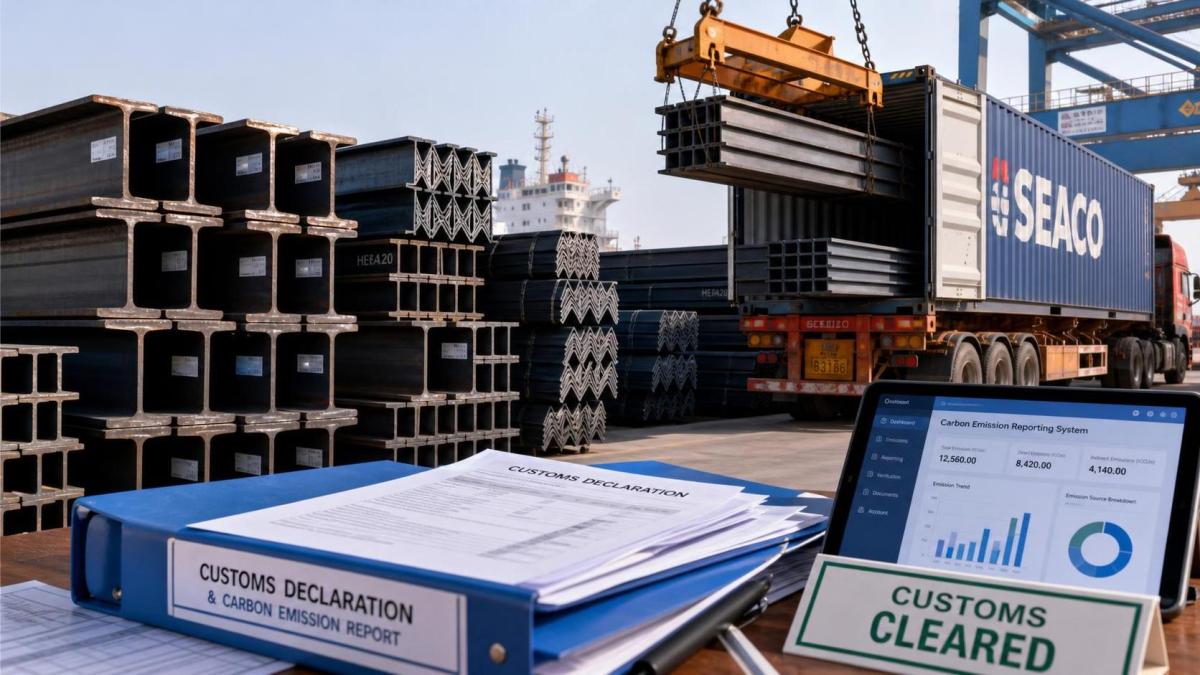
As of 2026-08-01, the EU CBAM moves into its third stage and applies to imports of all hot-rolled, cold-formed, and structural steel sections, including H-beams, angle steel, and channel steel. Importers are required to submit certified embedded carbon emissions data, expressed in tCO2e/ton, through the EU CBAM portal. If that information is not provided, the goods may be denied entry. The requirement directly affects delivery timing for Chinese steel exporters shipping to the EU, raises compliance-related costs, and changes customs clearance handling for downstream distributors.
Where the Operational Pressure Is Likely to Appear
Export shipments now depend on emissions documentation readiness
From an industry perspective, exporters of covered steel sections may be affected because the ability to complete a shipment is now tied more closely to whether embedded carbon data can be provided in an acceptable form. The impact is likely to be felt in pre-shipment preparation, document coordination with importers, and delivery scheduling. What deserves closer attention is whether product files, transaction documents, and compliance materials are aligned early enough to avoid delays at the border.
Import and distribution workflows face stricter customs coordination
Importers and downstream distribution businesses may be affected because customs clearance now depends on submitting certified emissions data through the EU CBAM portal. The practical pressure point is not only reporting itself, but also the handoff between seller, importer, and clearance-related teams. Observably, businesses involved in onward distribution should pay attention to whether the required data is available in time to support customs processing and planned delivery commitments.
Compliance and verification functions move closer to trade execution
Certification-related service providers, internal compliance teams, and documentation control functions may be drawn more directly into day-to-day shipment execution. The reason is straightforward: the rule links market access to certified embedded carbon emissions reporting. Analysis shows that the most relevant areas to monitor are document completeness, consistency of emissions reporting materials, and whether supporting records can move with the shipment process without creating additional handover friction.
What Companies Should Watch Now
Check whether covered product categories are correctly identified
Companies trading steel sections into the EU should first review whether their hot-rolled, cold-formed, or structural steel products fall within the scope described in this update. This matters because misclassification or incomplete internal screening could create avoidable compliance gaps at the shipment stage.
Prepare certified emissions records as part of shipment documents
What deserves closer attention is the growing importance of embedded carbon emissions data as a transaction-critical file rather than a separate sustainability record. Businesses should monitor whether certified tCO2e/ton data is available in a usable form for submission through the EU CBAM portal and whether the relevant documents can be matched to specific shipments without delay.
Reassess delivery timing and customs handoff arrangements
Analysis shows that delivery cycles may be affected when documentation review and portal submission become part of the import process. Exporters, buyers, and logistics-facing teams should therefore pay attention to lead-time assumptions, customs filing coordination, and whether distribution commitments rely on clearance windows that are now tighter than before.
Follow execution language and market-side document requests
The event summary confirms the reporting requirement and the consequence of non-submission, but it does not provide fuller operational detail. For that reason, companies should continue watching for how compliance language appears in transaction documents, procurement requirements, technical files, and trade-facing communications linked to EU-bound steel products.
Why This Looks Like an Execution Signal
Observably, this development is better understood as an implemented compliance threshold rather than a distant policy discussion. The key change is that embedded carbon reporting for the covered steel sections is tied directly to import acceptance. At the same time, it is still appropriate to treat parts of the practical rollout as an area requiring continued observation, especially where market participants need clarity on documentation workflows, certification handling, and how the requirement is applied in routine trade operations.
How to Read This Update
From an industry perspective, the significance of this update lies in the shift from broad carbon policy awareness to shipment-level execution for steel section imports into the EU. It is more appropriate to understand this as a rule already taking effect at the point of entry, with direct implications for compliance preparation, customs coordination, and delivery planning. The broader commercial impact will still depend on how companies adapt their documentation and trade processes in practice.
Basis of This Article
This article is based on the user-provided news title, event date, and event summary. For developments of this type, commonly relevant source categories may include official announcements, regulatory authority releases, customs or trade administration information, industry association updates, standards-related documents, and reporting by established business or industry media. A specific official source link was not provided in the input, so the underlying source trail still requires continued verification. It remains necessary to monitor later details such as implementation language, certification interpretation, procurement document changes, market feedback, and how companies execute the requirement in actual trade flows.

Fill in the information
NOW.
Our staff will contact you as soon as possible