
NEWS CENTER

On July 20, 2026, the U.S. Department of Commerce opened an expedited first sunset review of the antidumping order on hot-rolled strip steel from China, covering products under HS 7210.70, 7211.14 and related classifications. For exporters, importers, customs teams, and downstream buyers tied to U.S.-bound shipments, this is worth close attention because the review concerns whether existing antidumping duties of 12.3% to 48.7% should remain in place, with direct implications for future compliance and pricing decisions over the next five years.
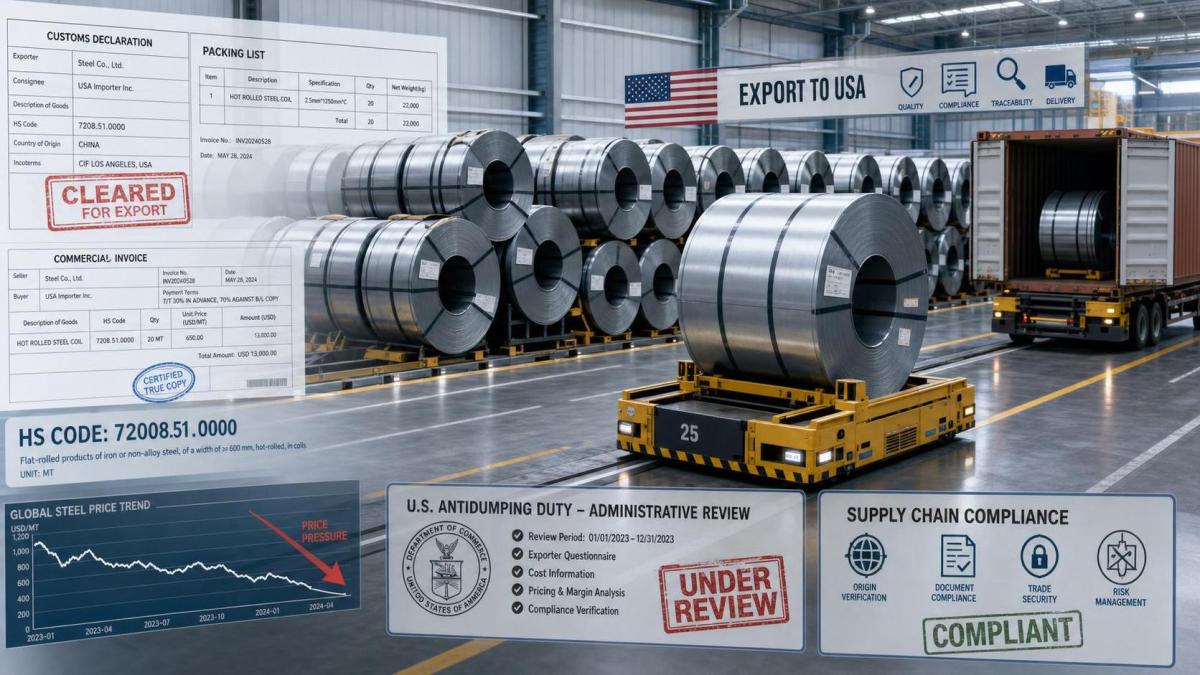
What the filing confirms at this stage
The confirmed fact is that the U.S. Department of Commerce formally initiated the first expedited sunset review on July 20, 2026, regarding the antidumping duty order covering hot-rolled strip steel originating in China. The products referenced include HS 7210.70 and 7211.14, among others. According to the information provided, the purpose of the review is to assess whether maintaining the current antidumping duties, ranging from 12.3% to 48.7%, aligns with the interests of the U.S. domestic industry. The review outcome is expected to affect customs clearance compliance and pricing strategy for exports of these products to the United States during the coming five-year period.
Where the pressure points may emerge in the supply chain
Exporters and direct trading companies
From an industry perspective, exporters and trading companies are the first group likely to feel the impact because their U.S.-bound business depends directly on duty treatment and customs compliance. The main pressure point is not only landed cost, but also the ability to plan quotations, delivery commitments, and customer negotiations under continued trade-remedy exposure.
Importers and customs-facing operations
Importers are specifically exposed because the review result may shape future clearance compliance requirements and cost assumptions. What deserves closer attention is the need to coordinate response work early, especially where product classification, filing documentation, and transaction planning affect import execution. The information provided also indicates that importers should prepare alternative supplier plans in advance.
Processors, manufacturers, and downstream buyers
For processors and manufacturing users purchasing hot-rolled strip steel for U.S.-related supply programs, the impact may appear through procurement timing, supplier selection, and contract pricing. Even where they are not the direct importer of record, these companies may still need to reassess sourcing reliability and exposure to changes in trade-related cost structures.
Supply chain and service providers
Logistics providers, customs brokers, and related service firms may also be affected through higher client demand for document coordination, compliance checks, and contingency planning. Observably, this kind of review tends to matter operationally when customers ask not only whether duties remain, but how shipment arrangements and supplier choices should be adjusted before a final outcome is known.
What companies should watch now
Follow the official review track closely
Companies involved in covered products should closely monitor subsequent official wording and procedural developments tied to the review. The practical issue is that commercial decisions often move faster than formal trade proceedings, so internal teams need a current view of what has been initiated and what has not yet been decided.
Check product scope and transaction exposure
Businesses should review whether their exported, imported, or sourced products fall within the referenced HS categories such as 7210.70 and 7211.14, and how much of their U.S. business depends on those lines. In practice, this affects pricing discipline, customs preparation, and customer communication.
Prepare documentation and coordination early
The information provided highlights the need for response coordination. For companies in active trade flows, that means paying attention to product documentation, transaction records, and internal coordination across sales, compliance, procurement, and customs-facing teams. The issue is less about broad management language and more about whether the business can support consistent declarations and commercial explanations when needed.
Build supplier contingency into procurement plans
Analysis shows that alternative supplier planning deserves immediate attention, especially for importers that depend on continuity of supply into the U.S. market. This does not mean a final disruption is confirmed, but it does mean procurement teams should distinguish between policy risk and day-to-day fulfillment risk before contracts and shipment schedules are locked in.
Why this matters beyond the filing itself
This development is more appropriate to understand as a live policy signal rather than a completed market outcome. The fact pattern currently confirms the start of a review, not its final result. Still, the review matters because it concerns whether existing antidumping duties will continue and because the stated impact reaches directly into compliance and pricing strategy for the next five years. From an industry perspective, that combination makes this a matter for active monitoring rather than passive observation.
How the market is likely to read it for now
At this stage, the filing should be read as a meaningful procedural development with practical commercial consequences, especially for companies exposed to U.S.-bound hot-rolled strip steel trade. It is not yet a confirmed change in duty treatment, but it is also not a routine headline that can be ignored. The more balanced view is to treat it as an ongoing trade-policy development that requires continued attention, internal preparation, and disciplined communication across sourcing and customs-related functions.
Basis of this article and follow-up focus
This article is based on the user-provided news title, event date, and event summary regarding the July 20, 2026 initiation by the U.S. Department of Commerce of an expedited first sunset review of the antidumping order on hot-rolled strip steel from China. For this type of development, commonly relevant source categories may include official government notices, company disclosures, industry association updates, authoritative media coverage, and trade or standards-related documents. A specific official source link was not provided in the input, so the underlying documentation and subsequent procedural updates still need to be verified on an ongoing basis. The main follow-up focus should remain on any further official statements, changes in review language or scope, and practical signals affecting customs compliance, pricing, and supplier planning.

Fill in the information
NOW.
Our staff will contact you as soon as possible