
NEWS CENTER

On July 28, 2026, the U.S. Department of Commerce announced the fifth annual administrative review of the antidumping duty order covering carbon steel and alloy steel sections from China, including products under HS codes 7216.10-7216.99. The development matters because it is not just a procedural update: the review may lead to a recalculation of dumping margins for certain companies and may affect customs clearance costs and compliance document requirements for exports to the U.S. from the fourth quarter of 2026. That places immediate attention on exporters, U.S. importers, distributors, and buyers sourcing steel structure projects in the U.S.
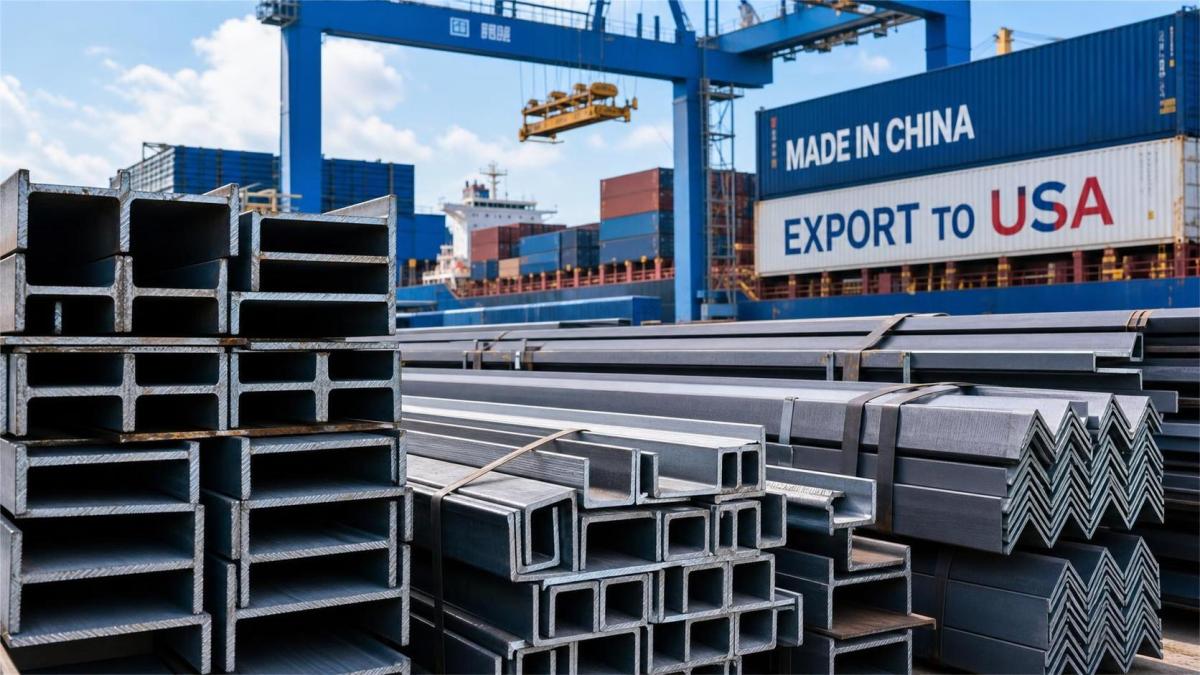
What the announcement confirms at this stage
The confirmed facts are limited but commercially relevant. The U.S. Department of Commerce published the notice on July 28, 2026 and formally initiated the fifth annual review of the antidumping duty order on carbon steel and alloy steel sections originating in China. The scope referenced in the user-provided summary includes HS codes 7216.10-7216.99 and related products. The review will reassess dumping margins for certain companies. The summary also indicates that the review may affect U.S.-bound customs clearance costs and documentation requirements starting in the fourth quarter of 2026, creating direct compliance and procurement-cycle risk for U.S. distributors, importers, and end buyers involved in steel structure purchasing.
Where the pressure is likely to appear in the supply chain
Export transactions tied to U.S. entry
From an industry perspective, Chinese exporters shipping covered steel sections to the U.S. are the first group likely to feel the impact of this review. The reason is straightforward: any reassessment of dumping margins can influence the cost assumptions behind active quotations, shipment timing, and customer negotiations. What deserves closer attention is whether export files, product classification records, and transaction documents are complete and internally consistent, because changes in customs clearance cost exposure usually turn document quality into a practical risk point.
Importers and distributors managing landed cost
U.S.-facing importers and distribution businesses may face pressure in landed-cost calculations and order acceptance decisions. Analysis shows that even before any final operational effect is fully visible, the announcement itself can require import-side teams to recheck product coverage, supporting documents, and the assumptions used in pricing and delivery commitments. For these companies, the main exposure is not only duty-related cost uncertainty but also the risk of delays or additional review in routine compliance handling.
Project buyers working on steel structure procurement
End buyers procuring steel structure projects in the U.S. may be affected through purchasing schedules and supplier coordination. Observably, buyers with projects linked to covered product categories may need to review whether procurement timetables, bid documentation, and supplier commitments still match expected import conditions. The practical issue is less about broad market sentiment and more about whether procurement teams can absorb possible changes in clearance cost and supporting document requirements without disrupting project sequencing.
Service providers supporting documentation and trade execution
Supply chain service providers, including parties involved in customs handling, trade documentation, and shipment coordination, may also see a more demanding review environment. It is more appropriate to understand this as a documentation and execution signal rather than a confirmed operational outcome. Where covered products are involved, these service providers may need to pay closer attention to HS code use, file consistency, and the readiness of compliance materials used at the import stage.
What companies should watch now
Check whether product scope and classification files are aligned
Analysis shows that businesses dealing in the covered steel sections should first verify whether their product lists, HS code references, commercial descriptions, and shipment records are aligned with the scope referenced in the review notice. This is a practical step because classification consistency often becomes more important when a trade remedy review may change cost or documentation expectations.
Review document readiness for late-2026 shipments
What deserves closer attention is the documentation chain for shipments expected from the fourth quarter of 2026 onward. The user-provided summary states that customs clearance cost and compliance document requirements may be affected, so companies should watch whether contract files, commercial invoices, packing details, technical descriptions, and import support records are sufficiently complete for closer scrutiny. Since no detailed implementation language was provided in the input, this should be treated as a watch point rather than a confirmed new filing rule.
Reassess procurement timing and quotation validity
For importers, distributors, and project buyers, the immediate operational question is whether current purchasing assumptions remain usable through the review period. Observably, teams may need to revisit quotation validity periods, supplier confirmation terms, and delivery planning where U.S.-bound covered products are involved. This does not mean a confirmed disruption has already occurred; it means the review introduces enough uncertainty that timing and pricing discipline become more important.
Follow later official wording and market-side execution
Analysis shows that the most important next step is continued monitoring rather than premature conclusions. Companies should follow subsequent official wording, execution practice, and any changes in how compliance expectations are described in procurement files, import processing, or customer-side requirements. Because the input does not provide final review results or detailed enforcement guidance, businesses should avoid treating the announcement itself as a completed outcome.
Why this reads more as an execution signal than a final result
Observably, this development is better understood as an active trade-rule signal rather than a settled commercial endpoint. The confirmed fact is the launch of the annual antidumping review. The commercial significance comes from the possibility that dumping margins and related import compliance conditions may shift for certain participants. From an industry perspective, that makes this an event that merits operational attention now, while still requiring further verification before firms treat it as a definitive change in cost or market access conditions.
How the market should frame this development
The industry value of this announcement lies in its direct link to trade execution. It connects a formal U.S. trade remedy review to practical questions around customs cost exposure, documentation readiness, purchasing rhythm, and supplier coordination for covered steel products. It is more appropriate to understand this event as a rule-driven development that has already entered the execution pipeline, but whose final commercial effect still needs to be observed through later official statements and market practice.
Basis of this article and what still needs verification
This article is based on the user-provided news title, event date, and event summary. For developments of this type, relevant source categories usually include official government notices, releases from regulatory or trade authorities, customs or trade administration information, industry association updates, standard-setting materials where applicable, and reporting by established professional media. A specific official source link was not provided in the input, so the underlying notice and any later official clarification should continue to be verified. Further observation is still needed on implementation details, compliance interpretation, procurement document changes, bidding language, market feedback, and how affected companies execute against the review timeline.

Fill in the information
NOW.
Our staff will contact you as soon as possible