
NEWS CENTER

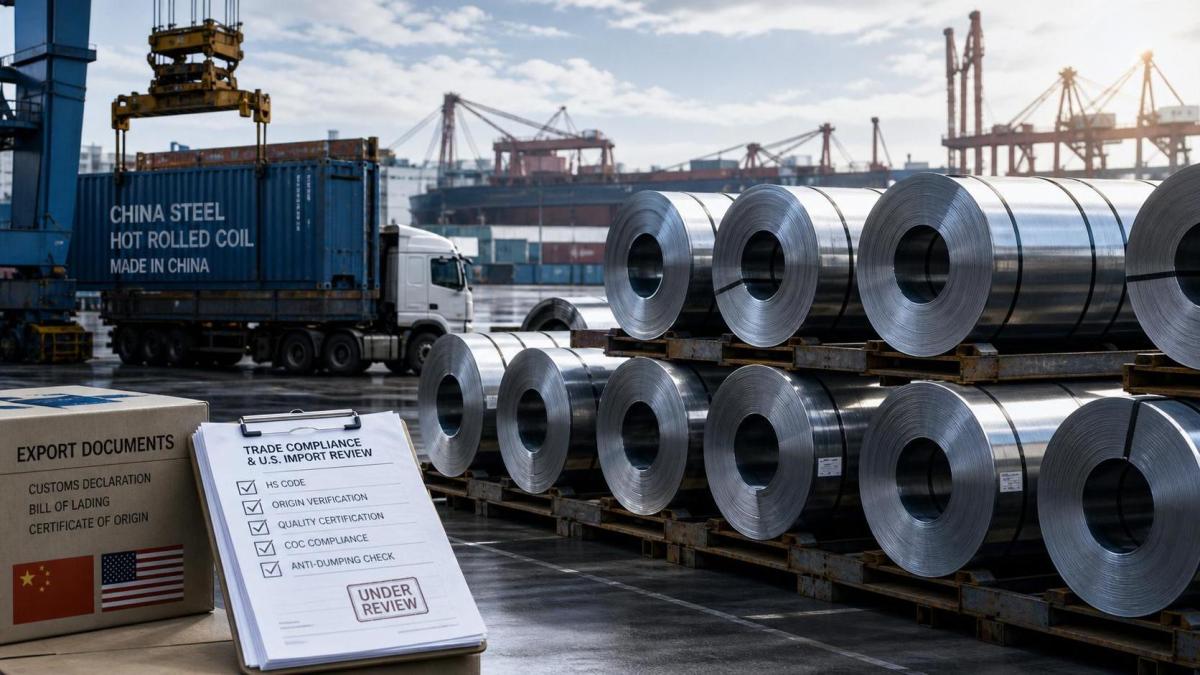
On July 12, 2026, the U.S. Department of Commerce formally opened an anti-dumping administrative review covering hot-rolled coil from China under HS 7208.51–7208.90. The review applies to export shipments made between April 1, 2025 and March 31, 2026, and it is already relevant to exporters, U.S. importers, customs teams, procurement managers, and downstream buyers because the outcome of this process can affect duty treatment, document preparation, and cost calculations used in current business planning.
What the July 12 notice confirms
The confirmed facts are limited but commercially important. According to the announced notice dated July 12, 2026, the U.S. Department of Commerce has initiated an anti-dumping administrative review for hot-rolled coil originating in China. The products covered are identified under HS 7208.51–7208.90, and the review period covers exports shipped from April 1, 2025 through March 31, 2026.
The event summary also makes clear that this review will have a direct bearing on duty-rate application for exports to the United States over the next 12 months. It also has implications for customs clearance documentation and for how buyers calculate landed cost and procurement budgets. Importers are expected to reassess supplier compliance qualifications and current price structures in light of the review.
Where the immediate pressure is likely to appear
Export transactions face renewed rate and documentation sensitivity
From an industry perspective, exporters shipping covered hot-rolled coil to the U.S. may be affected first through the practical link between the review and future duty-rate application. The main business pressure points are likely to be shipment records, product classification consistency, and the completeness of customs-related documentation tied to covered export batches.
Importers need to revisit supplier screening and cost assumptions
For U.S. importers and procurement-side buyers, the review matters because supplier compliance status and pricing logic may need to be checked again. What deserves closer attention is not only quoted product price, but also whether the current structure of transactions still supports internal cost planning once duty-related uncertainty is factored into purchasing decisions.
Supply chain and customs service providers may see heavier compliance work
Supply chain service providers, customs brokers, and trade compliance teams may be affected through a higher documentation burden and closer review of filing accuracy. In operational terms, the key impact is likely to fall on document readiness, shipment traceability, and coordination between exporter, importer, and clearance service parties.
Downstream users may need to monitor procurement timing and budget exposure
Processors, manufacturers, distributors, and end-use buyers that rely on imported hot-rolled coil may not be the direct subject of the review, but they can still be affected through procurement cost accounting and supplier stability assessments. Observably, any business that uses U.S.-bound Chinese-origin material in its planning will need to pay closer attention to price validity periods and contract assumptions.
What companies should watch now
Follow official wording and scope details closely
Analysis shows that the most immediate task is to track the official review process carefully and distinguish confirmed procedural language from market interpretation. Companies involved in covered shipments should pay attention to how the review scope, covered period, and implementation details are referenced in day-to-day trade execution.
Recheck records tied to the covered shipment window
The announced review period runs from April 1, 2025 to March 31, 2026, which makes transaction-level record review a practical priority. Exporters, importers, and service teams should focus on whether shipment files, product coding, and supporting customs materials for that period are complete and internally consistent.
Separate policy signal from immediate commercial execution
What deserves closer attention is the difference between the launch of a review and a finalized commercial outcome. Businesses should avoid treating the initiation itself as a settled result, while still preparing for its operational effects in pricing, customs work, and customer communication. That distinction matters for contract discussions and internal forecasting.
Prepare for supplier and customer communication around pricing
Because the review may affect buyer cost calculations and supplier qualification assessments, companies should be ready to explain how current quotations, duty assumptions, and supporting compliance materials are being handled. In practice, this means aligning sales, trade compliance, logistics, and procurement teams before counterparties ask for revisions or clarifications.
How this development is best understood at this stage
Analysis shows that this is more appropriately understood as an active trade-policy process with near-term operational consequences, rather than as a final market outcome. The confirmed information already indicates direct implications for duty treatment, customs preparation, and purchasing cost models, so the development is not merely symbolic.
At the same time, it is still a review in progress. Observably, the current significance lies in the need for businesses to reassess exposure and preparedness, while continuing to monitor subsequent official disclosures. For the industry, the practical message is that compliance quality and pricing discipline now matter as much as shipment volume.
Why the market should keep this on its working agenda
This July 12 action is significant because it affects a defined product category, a specific shipment period, and a set of commercial decisions that extend beyond exporters alone. It is more appropriate to understand this as a short-term operational trigger with broader policy relevance, rather than as a completed result. Companies connected to U.S.-bound Chinese hot-rolled coil should treat it as a live issue for customs readiness, supplier review, and cost planning, while keeping expectations grounded in what has actually been confirmed.
Basis of this article and points for continued verification
This article is based on the user-provided news title, event date, and event summary concerning the July 12, 2026 initiation by the U.S. Department of Commerce of an anti-dumping administrative review on Chinese hot-rolled coil. No additional unverified facts, company names, market data, or source links have been added.
For this type of development, commonly relevant source categories may include official government notices, company disclosures, industry association updates, authoritative media reporting, and standards or classification-related documents. The specific official source link was not provided in the input, so further verification remains necessary. Continued attention should focus on subsequent official wording, procedural updates, and any clarifications affecting duty-rate application, documentation requirements, and importer compliance review.

Fill in the information
NOW.
Our staff will contact you as soon as possible