
NEWS CENTER
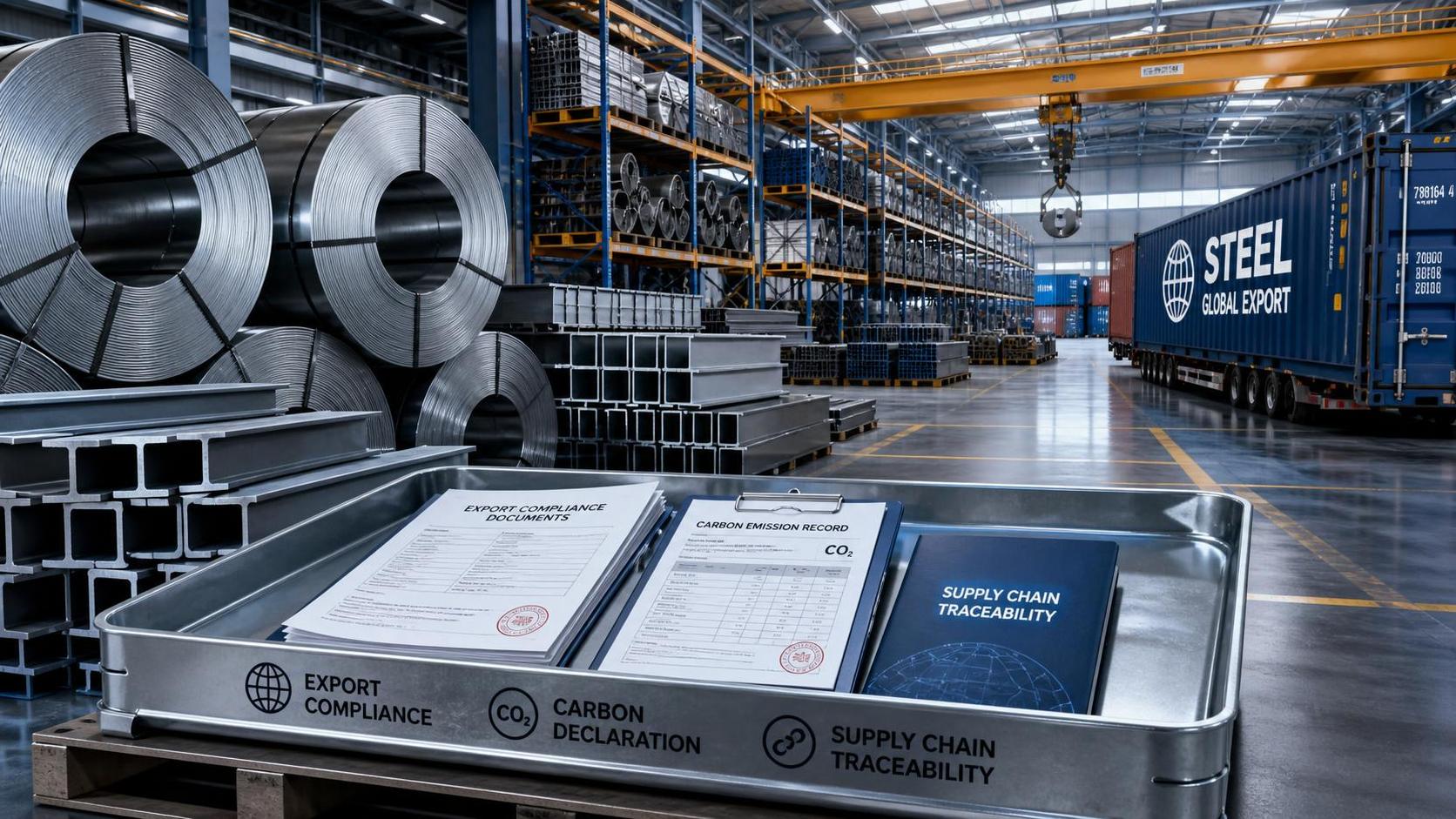
On August 8, 2026, the EU moved the CBAM transitional regime for steel products into a mandatory reporting stage. Exporters shipping steel products and sections to the EU, including Chinese suppliers, are now required to file quarterly information on embedded carbon emissions, electricity sources, and supporting evidence for emission reductions. This matters beyond regulatory wording alone: it reaches customs clearance, future market access, importer-exporter coordination, procurement documentation, and the ability of supply chains to produce consistent carbon data.
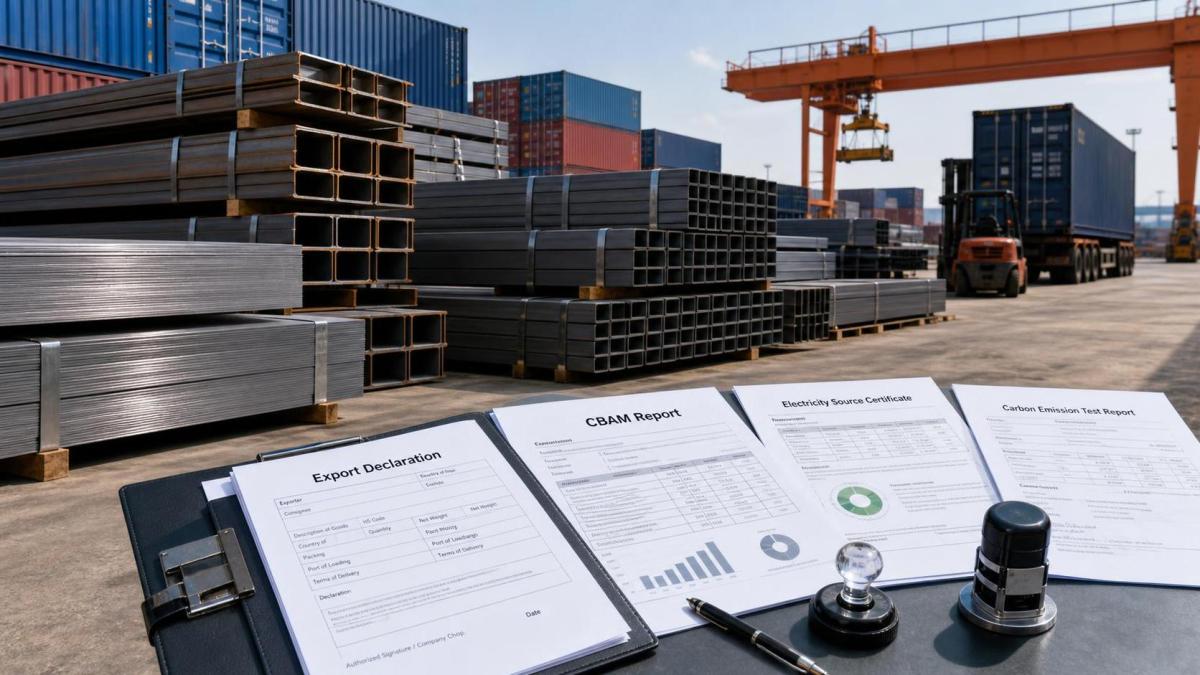
What the new reporting stage now requires
According to the provided event summary, the change took effect on August 8, 2026. It applies to exporters of steel products and sections entering the EU market. The required quarterly reporting covers embedded carbon emissions, the source of electricity used, and emission-reduction credentials or supporting documents. The same summary states that non-compliant reporting may affect customs clearance and later eligibility for access under the formal phase. It also directly relates to how responsibilities are shared with overseas importers, how procurement files are prepared, and how carbon data is coordinated across the supply chain.
Where the pressure is likely to appear first
Export transactions now depend more heavily on data readiness
From an industry perspective, exporters are likely to feel the most immediate impact because the reporting obligation is tied to goods entering the EU market. The practical pressure point is no longer only shipment preparation, but also the ability to assemble quarterly emissions-related information in a format that can support trade execution. What deserves closer attention is whether existing export documentation workflows are capable of carrying carbon-related data alongside ordinary commercial and delivery records.
Importers and buyers face a tighter coordination burden
Analysis shows that overseas importers and procurement teams may also be affected because the summary explicitly links the requirement to responsibility sharing. In practice, this suggests a greater need to align product data, supporting documents, and filing timelines between buyer and seller. The business impact is likely to appear in supplier onboarding, contract review, purchasing files, and pre-shipment document checks rather than only at the point of customs handling.
Manufacturers and processors may be drawn into upstream disclosure
Observably, processing and manufacturing entities in the supply chain may come under pressure when exporters need verifiable information on embedded emissions and electricity sources. Even where they are not the direct filing party, their production records and internal data discipline may become more relevant to export compliance. The main change to watch is whether carbon-related production information becomes a routine requirement in supply chain communication and delivery preparation.
Supply chain service providers may see more document and traceability demands
From an industry perspective, logistics coordinators, trade service providers, and other supply chain support parties may be affected indirectly because incomplete or inconsistent reporting could disrupt customs clearance. The operational concern is less about creating policy interpretation and more about managing document completeness, timing, and traceability across multiple participants involved in export delivery.
What companies should examine now
Quarterly filing capability should be checked early
Analysis shows that companies involved in EU-bound steel trade should pay close attention to whether they can collect, review, and submit the required information on a quarterly basis. The current issue is not only data existence, but also whether internal teams can maintain a repeatable reporting process tied to shipment and customer requirements.
Procurement files may need closer alignment with carbon-related records
What deserves closer attention is the preparation of procurement and supporting documentation. Because the reported items include embedded emissions, electricity source information, and emission-reduction credentials, companies may need to review whether supplier files, technical documents, and trade records can support those reporting needs without gaps or inconsistent descriptions.
Responsibility boundaries with importers should not remain vague
Observably, the summary points to responsibility sharing with overseas importers, which means counterpart roles may need clearer definition in day-to-day execution. Companies should therefore watch for changes in document requests, reporting expectations, and allocation of compliance tasks in commercial coordination. The available information does not define a detailed execution model, so this remains an area to monitor rather than a settled procedure.
Customs and future access risks should be treated as operational, not theoretical
From an industry perspective, the stated connection between non-compliant reporting, customs clearance, and later formal-stage eligibility means the issue should be treated as an operational trade risk. It is more appropriate to understand this as a compliance condition that can affect delivery continuity, customer confidence, and future market participation, even if the full enforcement pattern still requires observation.
Why this looks like an execution signal, not a symbolic update
Analysis shows that this development is better understood as an implementation signal than as a general policy reminder. The reason is straightforward: the transition described here is tied to mandatory data submission, recurring reporting cadence, and consequences linked to clearance and later access. At the same time, it is still necessary to observe how market participants interpret document standards, how reporting expectations are applied in practice, and how procurement and tender materials may begin reflecting the new compliance burden.
How the market is likely to read this stage
At this stage, the most balanced reading is that the rule change has moved into practical execution for steel exports to the EU. It does not by itself confirm every downstream enforcement detail, but it clearly raises the importance of carbon data preparation, importer-exporter coordination, and document consistency. For the industry, this is less a distant policy discussion than a live compliance requirement that now sits closer to shipment, purchasing, and supply chain management.
Basis of this article and points still requiring verification
This article is based on the user-provided news title, event date, and event summary. For developments of this kind, relevant source categories would usually include official announcements, releases from regulatory authorities, customs or trade administration information, industry association updates, standards-related documents, and reporting by authoritative media. A specific official source link was not provided in the input, so it still needs to be verified on an ongoing basis. Observably, the areas that warrant further attention include detailed implementation language, compliance interpretation, changes in tender or procurement documents, industry feedback, and how companies carry out reporting in practice.

Fill in the information
NOW.
Our staff will contact you as soon as possible