
NEWS CENTER
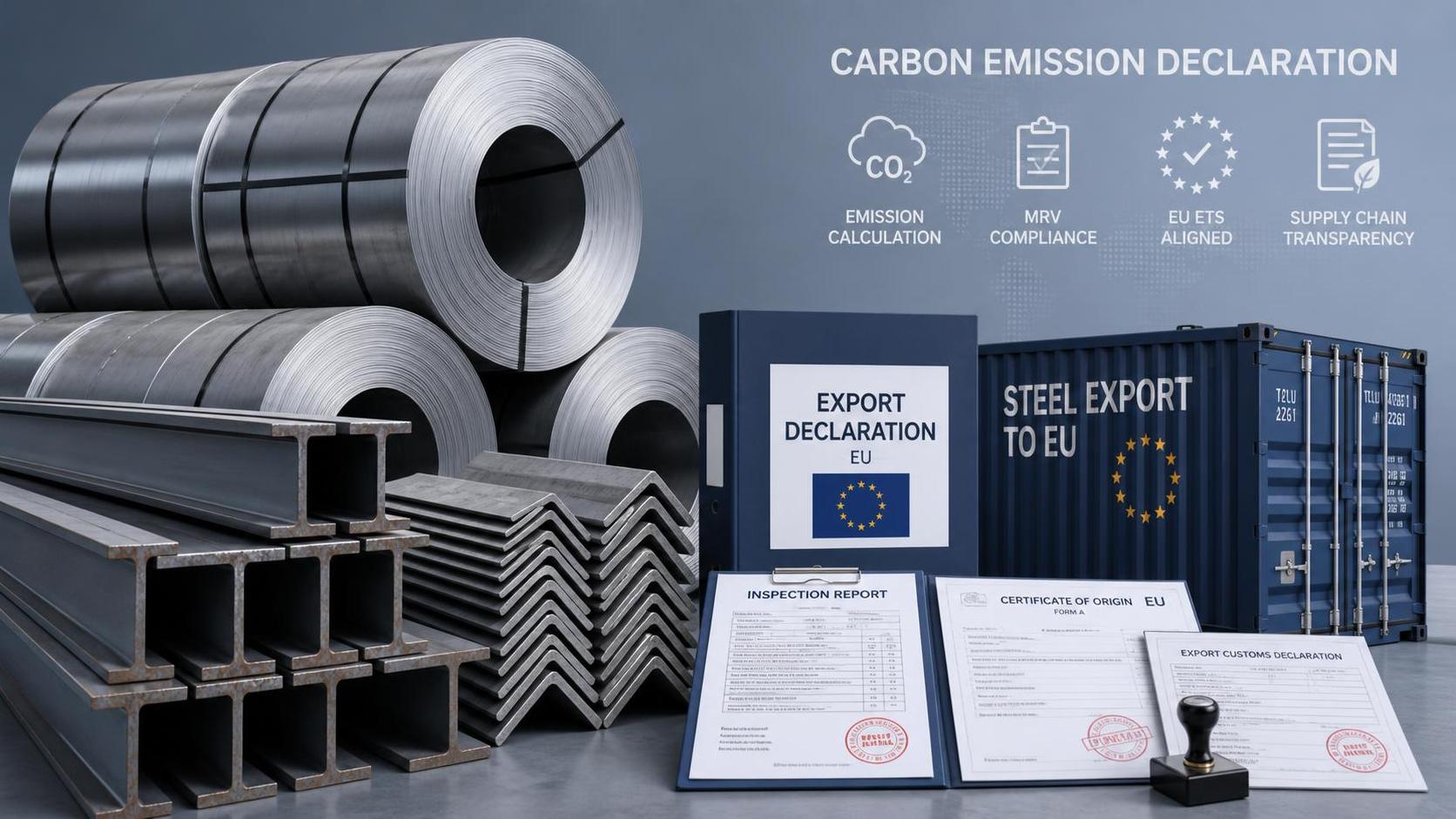
On August 10, 2026, the European Commission put into use the first set of actual emissions accounting data for steel products under CBAM, and Chinese suppliers exporting hot-rolled coil, H-beams, angle steel, and related sections to the EU are now required to begin the 2025 pre-declaration process. For exporters, import-side buyers, and supply chain service providers, this is not just an administrative update: it directly touches price structure, customs document readiness, and coordination with third-party verification, with non-compliant submissions carrying the risk of cargo delays or temporary carbon-related costs.
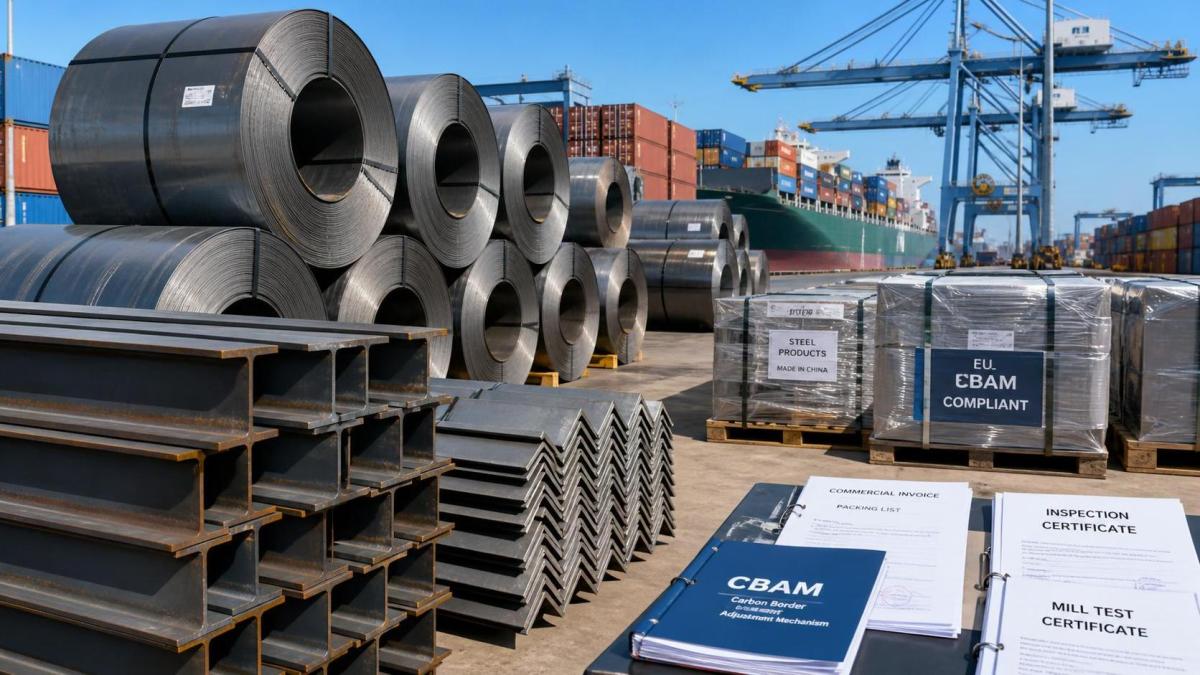
What Has Officially Changed as of August 10
The confirmed change is that the European Commission formally activated the first batch of actual emissions accounting data for steel products under CBAM on August 10, 2026. The requirement applies to Chinese suppliers exporting products such as hot-rolled coil, H-beams, angle steel, and other steel sections to the EU. From that date, affected suppliers must start the pre-declaration process for the 2025 period.
The information provided also confirms that the new requirement has a direct bearing on export quotation structure, customs clearance document preparation, and arrangements for cooperation with third-party verification parties. It also states that failure to submit in compliance may result in cargo being held at port or being subject to temporary carbon-related costs.
Where the Pressure Now Appears in the Supply Chain
Export contracts and pricing now face a new compliance variable
From an industry perspective, exporters are likely to feel the impact first because the new requirement is tied directly to steel shipments into the EU. The practical effect is likely to appear in how quotations are prepared, how cost items are explained to customers, and how delivery commitments are framed when declaration readiness is still being checked. What deserves closer attention is whether carbon-related compliance work is treated as part of the commercial offer rather than as a back-end paperwork issue.
Customs and shipping coordination become more document-sensitive
Supply chain service providers, including logistics and customs-facing teams, may be affected because the summary explicitly links the new rule to customs file preparation. In operational terms, this means shipment release may depend not only on ordinary trade documents but also on whether pre-declaration materials are complete and aligned. The risk highlighted in the provided information is clear: non-compliant filing may lead to port delays, which turns documentation quality into a delivery issue rather than a purely regulatory one.
Verification partners gain a more immediate role in export execution
Analysis shows that third-party verification arrangements are no longer peripheral for affected steel exports. Because the summary specifically mentions cooperation with third-party verification, manufacturers and traders may need to pay closer attention to how emissions-related information is prepared, reviewed, and passed through the transaction chain. For firms that rely on multiple production and trading entities, the handoff of supporting records may become a more sensitive part of execution.
EU-facing buyers and procurement teams may tighten file expectations
Buyers and procurement teams connected to EU-bound steel trade may also be affected because the rule change reaches into quotation composition and clearance readiness. Observably, this can influence what counterparties ask for before confirming orders, arranging shipment, or accepting delivery schedules. Even where commercial demand remains unchanged, document completeness and verification cooperation may become a more visible part of supplier evaluation.
What Companies Should Watch in the Near Term
Check whether 2025 pre-declaration preparation is commercially aligned
Analysis shows that affected exporters should pay close attention to whether the 2025 pre-declaration process is being handled early enough to support ongoing offers and shipment planning. The issue is not only whether filing is required, but whether internal trade, finance, and documentation teams are working from the same assumption about timing and readiness.
Review document sets used for clearance and customer submission
What deserves closer attention is the completeness of document packages tied to EU-bound steel shipments. Since the provided information identifies customs preparation as a direct impact area, companies may need to examine whether existing files, supporting statements, and handover routines are sufficient for the new requirement. Where execution details are not yet provided in the input, this remains a point for close monitoring rather than a settled checklist.
Reassess third-party verification arrangements before delivery pressure builds
Observably, firms should also look at how third-party verification cooperation is organized in practice. If verification support is needed to back pre-declaration work, late coordination could spill into shipment timing and customer communication. At this stage, it is more appropriate to understand this as an execution readiness issue that deserves early review.
Track how carbon-related cost exposure is handled in transactions
From an industry perspective, the summary's reference to temporary carbon-related costs means exporters and buyers may need to clarify how such exposure is reflected in pricing, allocation of responsibility, and shipment decisions. The input does not provide detailed implementation rules, so companies should treat this as a developing compliance and trade management issue rather than assume a uniform market practice already exists.
Why This Looks Like an Execution Signal, Not a Theoretical One
Analysis shows that this development is better understood as a live execution signal rather than a distant policy discussion. The reason is that the requirement is tied to an effective date, a defined pre-declaration action for 2025, and concrete consequences linked to port handling and temporary carbon costs. At the same time, it would be premature to treat all downstream procedures as settled, because the input does not provide detailed enforcement pathways, filing standards, or verification formats.
Observably, the market will need to keep watching how compliance expectations are expressed in trade documents, customer requests, and operational coordination. That is especially relevant where pricing, customs handling, and verification responsibilities sit across more than one company in the transaction chain.
How This Update Is Best Understood Now
This update matters because it connects CBAM-related steel emissions accounting directly to export execution for Chinese suppliers shipping specified steel products to the EU. The immediate significance is not only regulatory awareness but the need to align declarations, documents, pricing assumptions, and verification cooperation around a process that has now formally started.
Current observation suggests this is best understood as a rule implementation milestone with immediate trade and compliance consequences, while some practical details still require continued attention. For the industry, the prudent reading is that the change has already entered the operational stage, even if the full market response and execution practices still need to be observed.
Basis of This Article and What Still Needs Verification
This article is generated based on the user-provided news title, event date, and event summary. For developments of this kind, commonly relevant source types may include official announcements, regulatory authority releases, customs or trade administration information, industry association updates, standard-setting documents, and reporting by authoritative media.
No specific official source link was provided in the input, so the exact official publication path still needs to be verified on an ongoing basis. Continued observation is also needed on detailed implementation language, verification expectations, changes in tender or transaction documents, industry feedback, and how affected companies carry the requirement into day-to-day export practice.

Fill in the information
NOW.
Our staff will contact you as soon as possible